Note
A Privacy Mode Is Not a Proof: Venice's Ladder from Policy to Enclave
Venice's Anonymized → Private → TEE → E2EE ladder is a claim about who sees plaintext — not a cryptographic proof by itself. What a client can verify (capability flags, nonce-bound attestation, binding checks) versus what remains trust (proxy retention, ZDR partners, full DCAP).
2026-09-27 · deAI, venice-ai, privacy, tee, e2ee, attestation, prompt-custody, local-ai, protocol
A Privacy Mode Is Not a Proof: Venice's Ladder from Policy to Enclave
Hosted chat products sell comfort: answers, memory, a policy page that promises not to train on your prompts. Sovereignty-minded operators need a sharper cut. A privacy mode badge is not a cryptographic proof. It is a claim about who can see plaintext, what is retained, and what the client can check — three questions marketing often collapses into one word.
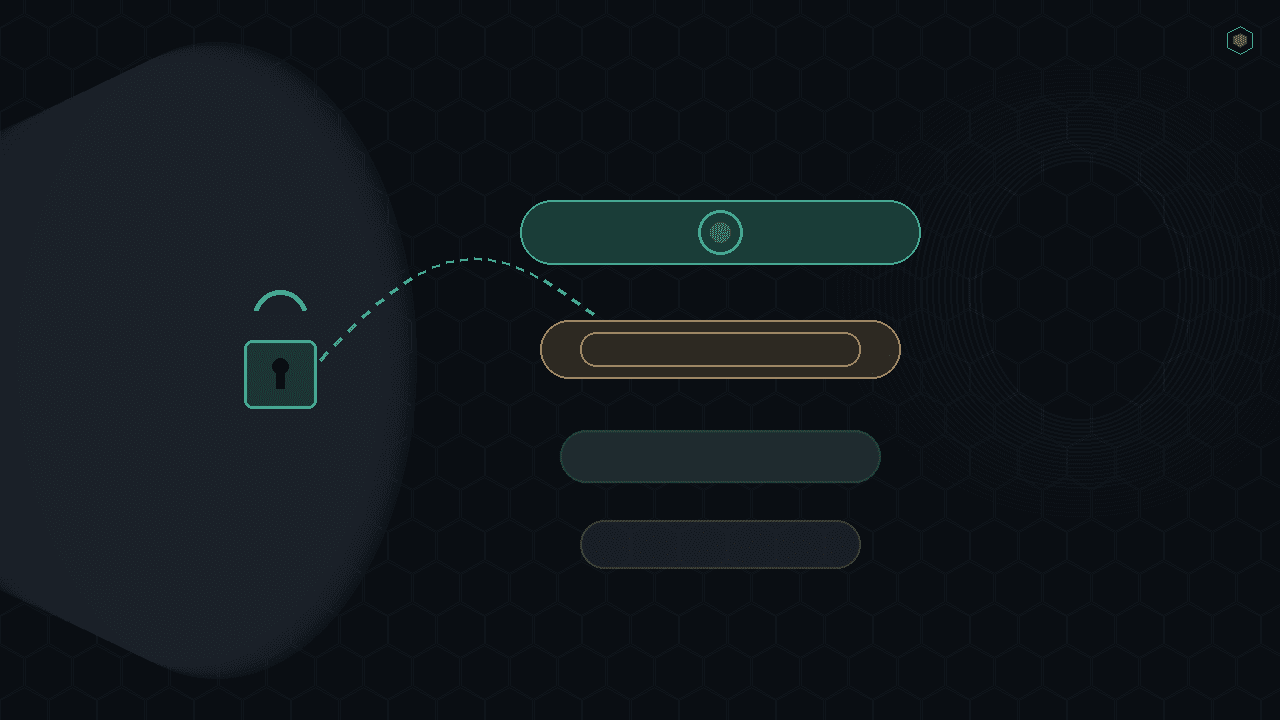
Venice AI markets a privacy ladder on a shared proxy: Anonymized → Private → TEE → E2EE. Official docs state that requests pass through Venice over HTTPS/TLS, that Venice does not store or log prompt and response content for normal inference, and that each selected model adds one of those four modes at the runtime layer. More explicit than most Big-Tech chat products — and still a hosted and relayed inference path, not local llama.cpp or "verify the weights on disk you control." This note maps mechanisms, then the verify-vs-trust fence.
Educational only. Protocol literacy — not product coaching, not token advice.
Shared foundation: the Venice proxy
Every mode starts the same way. The privacy overview describes a Venice proxy as the shared foundation: the client talks to Venice over TLS; Venice relays onward without (per docs) storing prompt or response content for normal inference. Operational metadata is a separate bucket — auth identifiers, timestamps, model choice, token counts, billing, rate limits, request IDs, IP/device signals, product events. Billing can track usage without prompt retention. "We don't log completions" is not "we see nothing about you."
Contrast Big-Tech hosted chat: account-bound identity, opaque retention/logging language, and prompt custody inside the provider's trust domain — plaintext to a server you cannot attest, plus a policy PDF. Venice's ladder does not abolish that class of problem for every mode — Anonymized and Private still put plaintext outside your client — but it names where policy ends and hardware-backed or client-encrypted controls begin.
The four modes (from official docs)
Use /models (or the product privacy badges) before you send anything sensitive. Docs map model_spec.privacy of anonymized / private, plus capability flags supportsTeeAttestation and supportsE2EE. FAQs and the privacy page align on four badges:
-
Anonymized — Venice proxies without forwarding your Venice identity to the model provider. Prompt content is still visible to that provider, which may process it under its own policies. Identity hiding ≠ content privacy.
-
Private — Routed through Venice-controlled or zero-data-retention (ZDR) partner infrastructure. Prompts and responses are processed for inference and, per policy/docs, not retained after the request completes. Stronger than Anonymized on retention language; still a contract and ops claim, not a client-verifiable enclave proof.
-
TEE — Supported text models run inside a Trusted Execution Environment (docs name Intel TDX and NVIDIA Confidential Computing) with remote attestation. Plain TEE usage can look like a normal chat completion: the client may still send plaintext over the API while the model runtime sits in hardware isolation. Attestation endpoints such as
/api/v1/tee/attestation(nonce-bound) and/api/v1/tee/signatureexist so clients can fetch evidence and, for production, verify quotes beyond a server-sideverified: trueflag. -
E2EE — The client encrypts prompts before they leave the device. Venice relays ciphertext; only the verified TEE decrypts. Official guide: ECDH on secp256k1, HKDF-SHA256, AES-256-GCM;
X-Venice-TEE-*headers; streaming required. Features that need plaintext outside the enclave — web search, memory, summaries, some tool flows, file uploads — are disabled. TEE and E2EE are text-model features today; both may sharee2ee-*IDs, with the request flow choosing TEE-only vs client E2EE.
Ladder language is progressive protection, not interchangeable slogans. Choosing Private because the badge is green is not the same act as implementing E2EE attestation and encryption on the client.
What you can verify vs what you must trust
Sovereignty work is bookkeeping: which claims are checkable, which are trust.
You can verify (with effort):
- Capability flags on
/models— does this ID claimsupportsTeeAttestation/supportsE2EE? - Attestation fetch with a fresh 32-byte nonce; nonce echo; presence of quote/payload fields (
intel_quote, optionalnvidia_payload, signing key/address). - Client-side structural binding on a supplied TDX quote body: nonce and signing-key address in REPORTDATA, debug mode off, model name consistency — as described by community library elkimek/venice-e2ee.
- Optional full DCAP quote authentication and NVIDIA evidence checks if you inject verifiers (the library's README is explicit: default
bindingis not full DCAP;dcapVerifiedstays false unless you add that path). - That E2EE ciphertext format and streaming decrypt behave as the published protocol describes.
You must take on trust (for some or all modes):
- Proxy behaviour for non-TEE modes: no content retention for normal inference is a documented architectural claim, not something a random client proves per request.
- Provider policies on Anonymized (the upstream still sees plaintext).
- ZDR / Private partner enforcement — contracts and ops, not a quote in your laptop.
- Full enclave authenticity unless you implement DCAP (or equivalent) and measurement policy; Venice's public E2EE guide does not currently publish a stable measurement allowlist for callers to pin.
- Metadata processing for auth, billing, abuse, and reliability — content may be withheld while metadata remains.
The elkimek README's useful honesty: default binding checks establish internal binding of fields in the supplied quote, not that Intel signed that quote; replay resistance and enclave authenticity need stronger verification. AES-GCM on stream chunks authenticates under a derived key; proving each ephemeral key belongs to the attested enclave is a separate receipt/trust-anchor problem. Treat "attestation endpoint returned OK" as evidence of a flow — not as a finished court exhibit.
Civil-liberty angle where it fits without geography cosplay: operators under opaque hosts, kill-switch dependency, or prompt custody risk care whether plaintext ever leaves a machine they control. Venice's upper rungs shrink who can read content; they do not remove dependency on Venice's relay, model availability, or account/wallet auth rails. Local open-weights remain the honest answer when the requirement is "no third party can revoke the binary."
Auth and payment rails — architecture only
Access mechanics are part of the trust surface, not a shopping list. Venice documents two shapes:
- API key — classic Bearer credential against
api.venice.ai, tied to an account/credit balance. - x402 wallet auth — docs: signed Sign-In-With-X (SIWX / SIWE-style) payload, prepaid USDC top-up on Base or Solana, pay-per-request style spendable balance without an API key. Headers and 402 top-up flows are protocol details for builders.
That is how requests are authorised and metered. It is not investment guidance. What this is not: CryptoDecentral does not advise on tokens, markets, yields, staking, or whether to acquire any Venice-related asset. Prefer reading privacy tiers over tokenomics pages.
Uncensored posture — and the local ceiling
Venice's product posture emphasises uncensored / less filtered access relative to many mainstream chat apps (FAQs contrast privacy, model choice, and control with ChatGPT-class services; App Store builds may be tighter than web/PWA). An uncensored hosted default is still not local open-weights control: you do not verify packaging, you do not keep the kill-switch on your desk, and you do not own the runtime when the relay or model ID disappears. Pair with local / P2P AI residency and RAG/embeddings trust boundaries when residency is first.
What this note deliberately does not do
It does not rank models, GPUs, or "best private AI." It does not give prices, buy/sell venues, custody instructions, swaps, staking-as-investment, yield pitches, or wallet rankings. It does not advise on VVV, DIEM, or any token. It does not claim Venice is equivalent to local llama.cpp. It does not treat Anonymized as end-to-end encryption. It does not equate a green TEE badge or a default client binding check with full DCAP + measurement allowlisting. It does not teach bypassing lawful process. It does not invent features beyond the cited docs and library README.
Educational takeaway: policy claims are not cryptographic claims. Read the mode, know who sees plaintext, know what your client actually verifies, and keep a local open-weights path when sovereignty requires it.
Related on CryptoDecentral
- Decentralised / local AI pillar
- Network metrics
- Local and Peer-to-Peer AI: Data Residency Without the Hype
- Local Chat Is Not Data Residency: RAG, Embeddings, and Vector Stores
- Successful Load Is Not Proof: Embedded GGUF Alignment and Wrong Tensors
Further reading (primary)
Sources
- https://docs.venice.ai/overview/privacy
- https://docs.venice.ai/guides/features/tee-e2ee-models
- https://venice.ai/faqs/all
- https://docs.venice.ai/guides/integrations/x402-venice-api
- https://github.com/elkimek/venice-e2ee
- https://raw.githubusercontent.com/elkimek/venice-e2ee/main/README.md
- https://cryptodecentral.co.za/notes/decentralized-local-ai
- https://cryptodecentral.co.za/notes/local-rag-embeddings-residency